





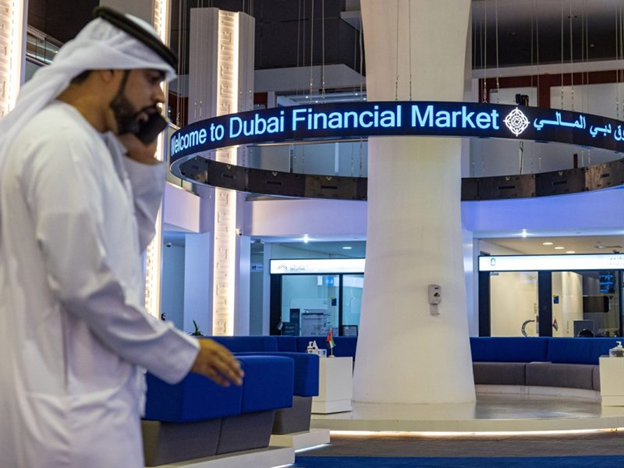
Big news moved the market very fast.
The UAE stock markets boomed after the US and Iran agreed to stop fighting. This gave investors a sense of relief. They felt safer, so they started buying stocks again.
According to Reuters, Dubai’s stock market jumped 6.9% in one day, the biggest rise since 2020. Abu Dhabi also went up by nearly 3%.
Before this, markets were down. People were worried about war. Oil prices had gone above $100, and key trade routes were at risk. This made investors nervous.
But once the ceasefire was announced, everything changed. Oil prices dropped to around $91, falling sharply. This made business conditions look better.
In simple words:
- Fear of war → markets fall
- Hope of peace → markets rise
But the ceasefire changed everything. Oil prices dropped sharply to around $91 per barrel, falling as much as 16% to 18%.
This sudden jump was not random. There were clear reasons behind it. let’s dive in
What Exactly Happened
The US and Iran agreed to a two-week ceasefire. This raised hopes that the Strait of Hormuz, a key oil route, would reopen.
Before this, the conflict had disrupted oil supply and created global panic. Billions were wiped out from the Gulf stock markets.
After the announcement, markets reacted instantly:
- Dubai Financial Market jumped over 8% in early trade before closing at +6.9%
- Abu Dhabi index surged close to 3%
- The UAE market value increased by nearly Dh125 billion
Top Performers Driving the UAE Market Surge
The rally was driven by strong UAE companies, which gained significantly as investor confidence returned.
Khaleej Times shows the Top performers included:
- Emaar Properties (+13%) – The real estate giant led the gains, reflecting renewed optimism in Dubai’s property market.
- Emirates NBD (+11%) – One of the largest banks in the UAE, benefiting from improved market sentiment and expectations of economic stability.
- Air Arabia (+10%) – Airlines jumped as lower oil prices reduced operational costs and travel demand picked up
Real estate and banking stocks were the key drivers, showing how sectors sensitive to confidence can react sharply to global news. Even smaller companies felt the boost, as investors poured money back into the market.
Almost all Dubai-listed companies closed in positive territory, with many mid-cap stocks gaining 5–8%, highlighting broad-based participation.
The rally also reflected global optimism, with foreign investors returning to UAE equities after weeks of caution. Analysts noted that such a strong, across-the-board surge is rare and underlines how market sentiment can pivot quickly after positive geopolitical news.
Why Markets Jumped So Fast
1. Relief After War Pressure
Markets had been falling since the conflict began in late February.
The ceasefire removed short-term fear. Investors came back quickly.
2. Oil Prices Dropped Sharply
Oil is the biggest driver in the region.
When oil fell below $100, it gave relief to:
- Airlines
- Banks
- Real estate
Lower oil means lower costs and a better business outlook.
3. Confidence Returned
The ceasefire improved investor sentiment.
Experts say it acted as a “strong catalyst” for markets and boosted risk appetite.
4. Global Ripple Effect
This was not just local.
- European markets also jumped over 3%
- Asian markets surged strongly
- Global sentiment improve
What Investors Should Watch
1. Ceasefire Stability
- The US–Iran ceasefire is only for a short period.
- If peace continues beyond the two weeks, investors may feel safer and the markets could rise further.
- If the conflict flares up again, fear will return and stocks could drop sharply.
- Basically, the market reacts quickly to any news about the conflict.
2. Oil Prices
- Oil is a major driver for the UAE economy and global markets.
- When oil stays below $100 per barrel, companies save on costs, which is good for profits and the stock market.
- If oil prices climb again above $100, costs rise, inflation pressure returns, and stocks could face downward pressure.
- Investors closely watch oil trends as a signal for market stability.
3. Strait of Hormuz
- The Strait of Hormuz is a key shipping route for global oil supply.
- Any disruption here can affect oil prices and investor confidence worldwide.
- If the Strait fully reopens and shipping flows normally, markets get a confidence boost.
- Smooth oil transport usually means lower costs, more trade, and stronger markets.
Final Thoughts
The UAE stock market surge is real. Dubai’s 6.9% jump shows how fast markets react to global events. One decision changed billions in value.
But this is not a stable rally yet. Right now, markets are moving on hope, not certainty.
Investors are optimistic but careful. Because in today’s world, one headline can change everything
